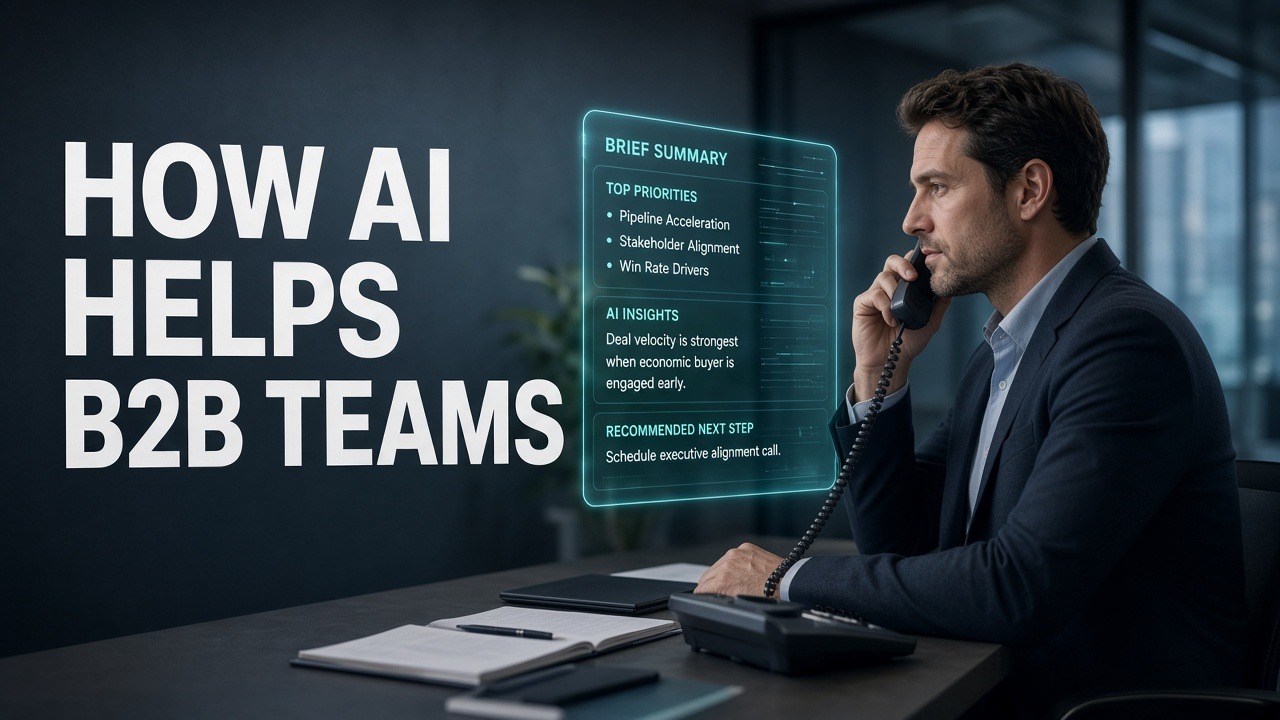
AI B2B sales prospecting teams use AI to prepare better human conversations.
In brief: AI does not replace the person who dials. For B2B sales prospecting teams, it removes the work around the call — research, drafting, follow-up, and brand-consistent content — so callers spend more time in conversations that turn into meetings. Used well, AI is a force multiplier for appointment setting; it is not a robot on the phone.
In this article
- What AI should (and shouldn’t) do for a prospecting team
- Content and brand consistency at scale
- Prep before the dial: research and lists
- More than the call: LinkedIn, blog, and follow-up
- How to start without losing the human voice
- FAQ

What AI should (and shouldn’t) do for a prospecting team
B2B telephone prospecting still wins on one thing: a real conversation with a decision-maker. Buyers hang up on scripts that sound synthetic. They stay on the line when the person calling knows the market, listens, and doesn’t push.
So the best use of AI is not “an AI that cold-calls for you.” It’s an AI that clears the clutter around the call:
- Draft a first version of messages a human still approves
- Turn notes into follow-ups and summaries
- Keep social and blog content on a steady cadence
- Help prioritize accounts and angles before anyone dials
- Track what went live and what still needs a decision
At Direct B2B, that is how we use Grok Bot day to day. Callers still own the phone. The assistant supports content, research, drafts, and handoffs — so humans stay where they create revenue: in qualified conversations.
Direct B2B’s line says it plainly: AI-powered + human-accomplished. AI accelerates the work. Humans carry the voice.
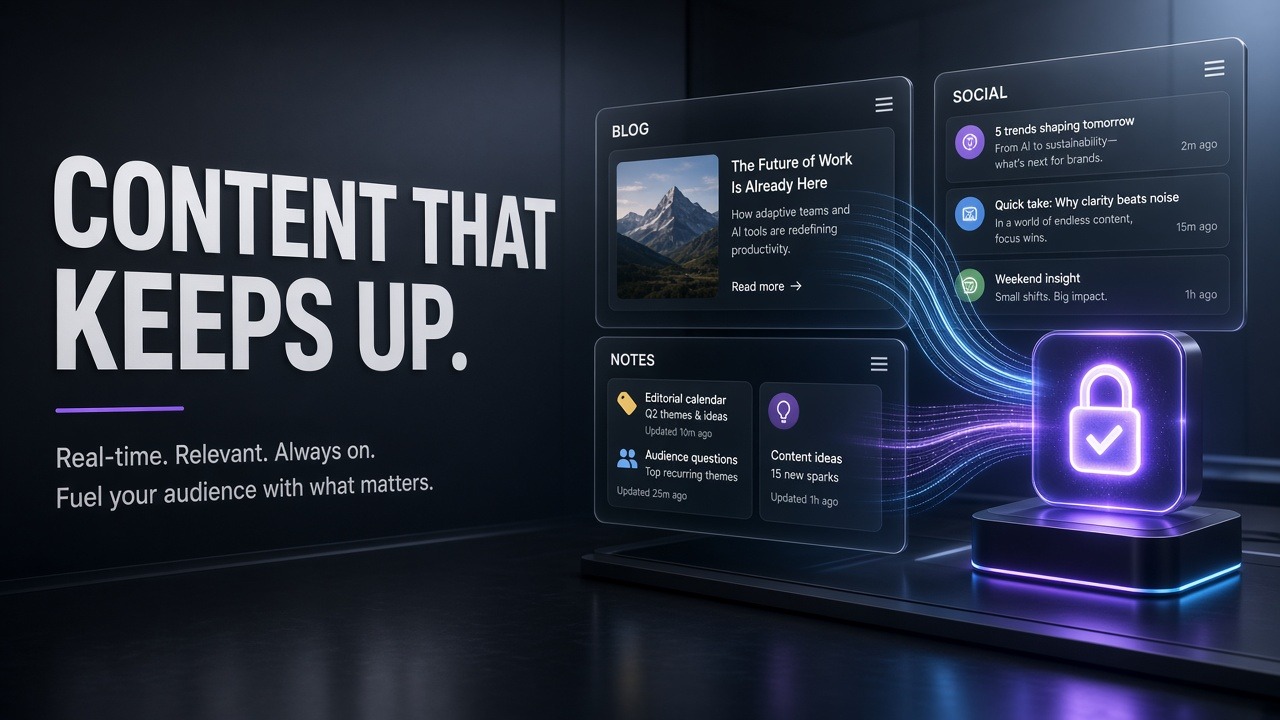
Content and brand consistency at scale
Prospecting teams live and die by cadence. If LinkedIn goes quiet, the Facebook Page stalls, or the blog only moves when someone “finds time,” the brand feels inconsistent — and trust drops before the first call.
AI helps a small marketing / sales-ops layer keep up without hiring a full content department:
1. Draft faster. First passes for posts, articles, and outreach notes in minutes, not half a day.
2. Stay on-brand. The same pillars every week: first calls, follow-ups, email vs phone, bilingual Canada, appointment setting — without pressure selling.
3. Adapt for each market. An English idea becomes French shaped for Quebec and francophone Canada — not a word-for-word translation. The reverse holds for English Canada.
4. Keep visuals consistent. Hero and section images that feel like one company across blog and social — on the English side of this mirror, we use a more futuristic AI look than the French set.
The rule that protects quality: nothing customer-facing goes out without a human yes. AI drafts. The team approves. That single gate keeps “faster” from becoming “sloppy.”
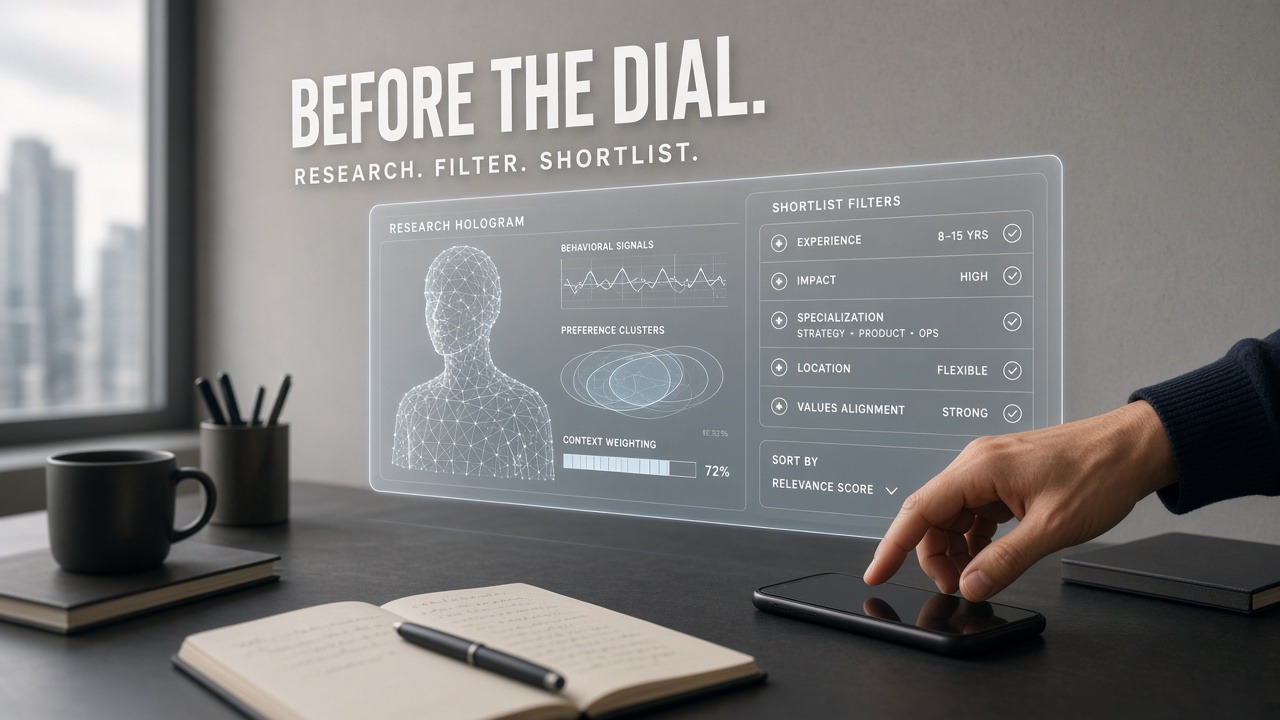
Prep before the dial: research and lists
The best call starts before anyone picks up the handset. AI can compress the prep that usually steals dialing time:
- Pull company context and role language for a shortlist
- Turn a long ideal-customer profile into a practical filter (title, geography, company size)
- Draft a warm note that sounds like the seller, not a mass blast
- Flag contacts who already said “not interested” so nobody burns the relationship
In Canadian prospecting, that matters. A VP of sales in Montreal and a founder in Quebec City don’t need the same opener — just as a VP in Mississauga and a founder in Calgary don’t. AI can propose both; the human picks the one that fits the thread and the day.
What AI must not do: scrape private data, spam connection requests, or send messages the seller hasn’t read. Prospecting reputation is fragile. Speed without judgment is expensive noise.

More than the call: LinkedIn, blog, and follow-up
Telephone prospecting doesn’t live alone anymore. Companies that fill calendars consistently often touch the same buyer in more than one place: a LinkedIn note, a useful article, a Page post that sounds like a real conversation, then the call.
AI helps coordinate that without turning the team into a social-media agency:
- LinkedIn: short, non-salesy notes to 1st-degree contacts — drafted for approval, skipped when someone already declined Blog: searchable articles that answer questions buyers already Google (appointment setting, outsourcing vs hiring, AI in prospecting)
- Follow-up: after a soft yes, a clear summary of what to bring on call two
- Internal clarity: handoffs and briefs so marketing, sales leadership, and callers share the same story
Grok Bot’s role at Direct B2B is exactly that supporting layer: keep the channels moving while the phone team stays on appointments. The value isn’t “AI magic.” It’s fewer dropped balls between channels.
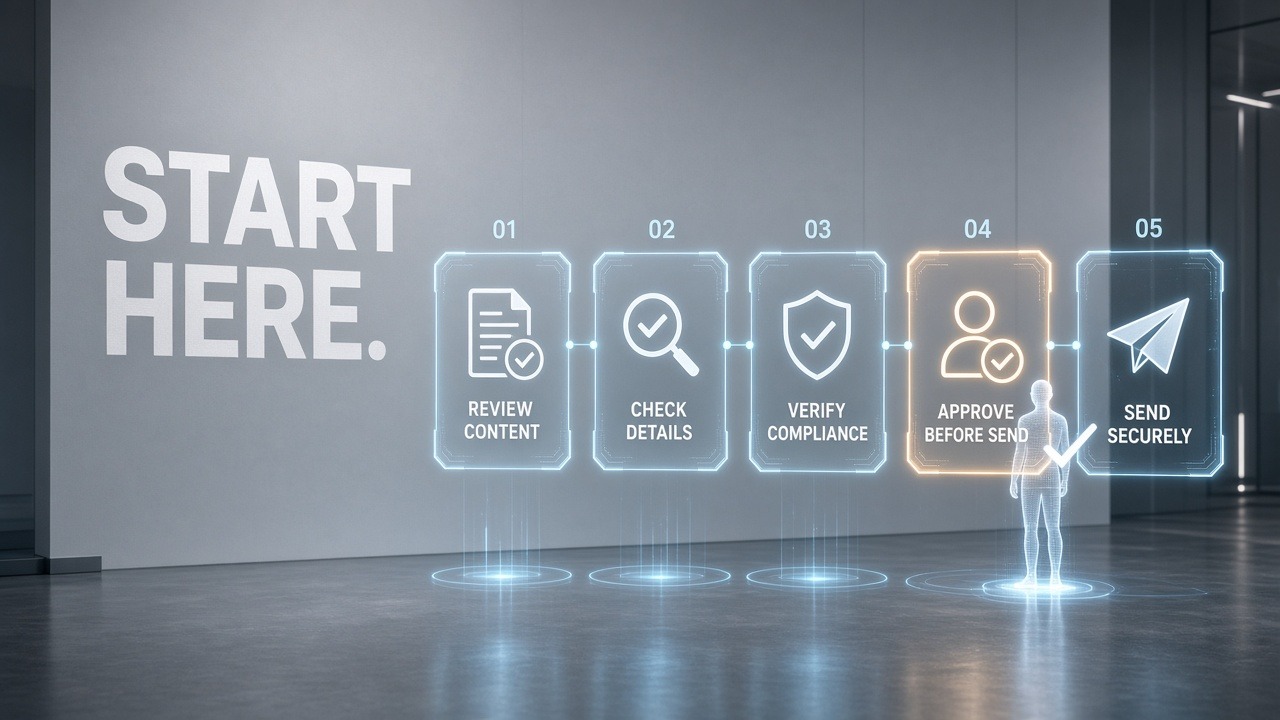
How to start without losing the human voice
If you lead a B2B prospecting team and want AI to help — without hijacking the brand — start here:
1. Keep humans on the calls. AI supports; it does not replace the conversation.
2. Use AI for prep and drafting. Research, first drafts, checklists, and reminders.
3. Write voice rules once. Non-pressure, bilingual Canada, value first. Paste them into every brief.
4. Approve before anything sends. Posts, notes, articles — the same gate every time.
5. Measure what matters. Meetings booked and conversations started — not “AI outputs produced.”
Do those five and AI becomes quiet infrastructure. Skip the approval gate and you get generic copy that sounds like every other vendor in the inbox.
FAQ
Will AI replace B2B phone prospectors?
Not if your buyers still want a human conversation. AI is strongest on prep, content, and follow-up. The call still needs judgment, listening, and trust.
What’s the first AI use case for an appointment-setting team?
Usually content cadence and call prep: drafts for social/blog, shortlists, and approved outreach notes. Those free dialing time without touching the live conversation.
How does Direct B2B use Grok Bot?
As an assistant for Facebook and LinkedIn support, blog drafts and visuals, research, and internal summaries — always with human approval before anything goes external. Callers remain human.
Is this only for large sales teams?
No. Smaller SMEs often feel the content-and-prep gap hardest. AI helps a lean team stay consistent without adding headcount too early.
Ready to talk prospecting?
Interested in a pilot project — book an exploratory conversation. We’ll walk through your markets, your timeline, and where AI should sit beside your callers (not instead of them).
Direct B2B — AI-powered + human-accomplished. B2B appointment setting across Canada.
Source FR (live): Comment l’IA aide les équipes de prospection B2B